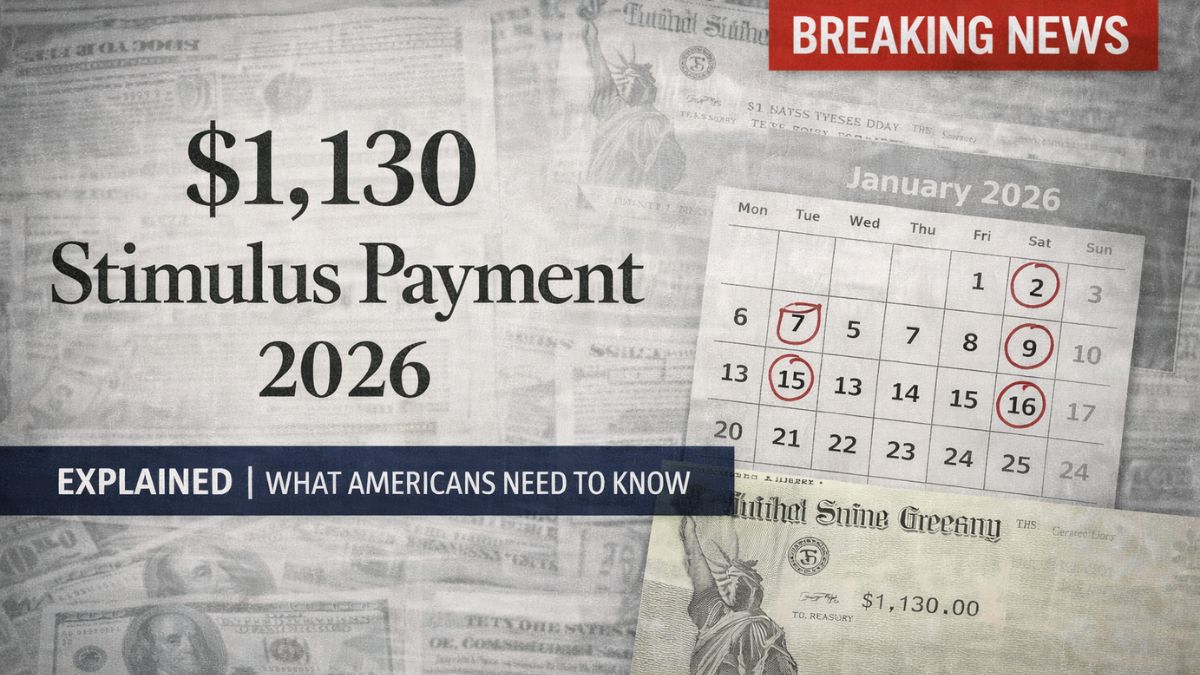
As 2026 begins, many Americans are closely watching discussions about a potential $1,130 stimulus payment. While the program is not yet officially confirmed, early proposals suggest it could provide targeted financial relief to low- and middle-income households. This payment is designed to help families manage rising costs of living, including groceries, rent, fuel, and medical expenses. Unlike the broad pandemic-era stimulus checks, this one is expected to focus on those most likely to benefit immediately.
Who Could Be Eligible
Eligibility is likely to center on individuals and families with lower to moderate incomes. Seniors on fixed incomes, working families facing high costs, and people already receiving certain government benefits may also qualify. Authorities will rely on recent tax returns and government records to identify eligible recipients, which could reduce the need for separate applications. Residency and tax filing status will also play a role, as officials aim to ensure the payment reaches those who need it most.

How the Payment May Be Delivered
If approved, the $1,130 payment will likely be issued in phases. Direct deposits for those with bank accounts on file are expected to arrive first, while paper checks or prepaid debit cards may be sent later. Staggering payments helps prevent delays and system overload. For couples or households, the final amount may differ depending on official rules. Keeping tax and banking information current will be essential to receive the payment on time.
Timing of the Stimulus Payment

Early signals indicate that payments could begin rolling out in early to mid-2026. Exact dates will depend on government approval and administrative scheduling. Recipients should not expect everyone to receive funds on the same day. Monitoring official announcements is crucial to avoid confusion or misinformation from social media posts or unofficial sources.
Preparing for the Payment
Even before the program is confirmed, households can prepare by filing recent tax returns accurately and updating banking or contact information linked to government benefits. Staying informed through official government portals can help ensure a smoother and faster payment process.

Conclusion
The proposed $1,130 stimulus payment in 2026 could offer timely financial support to households under pressure from rising costs. While details are still being finalized, understanding eligibility, timing, and delivery methods can help Americans plan effectively. Being prepared and relying only on official government announcements will be key to receiving any potential payment without stress.
Disclaimer

This article is for informational purposes only and does not constitute financial, legal, or tax advice. Eligibility, payment amounts, and timelines for any 2026 stimulus program may change. Readers should consult official government sources or qualified professionals for guidance specific to their situation.