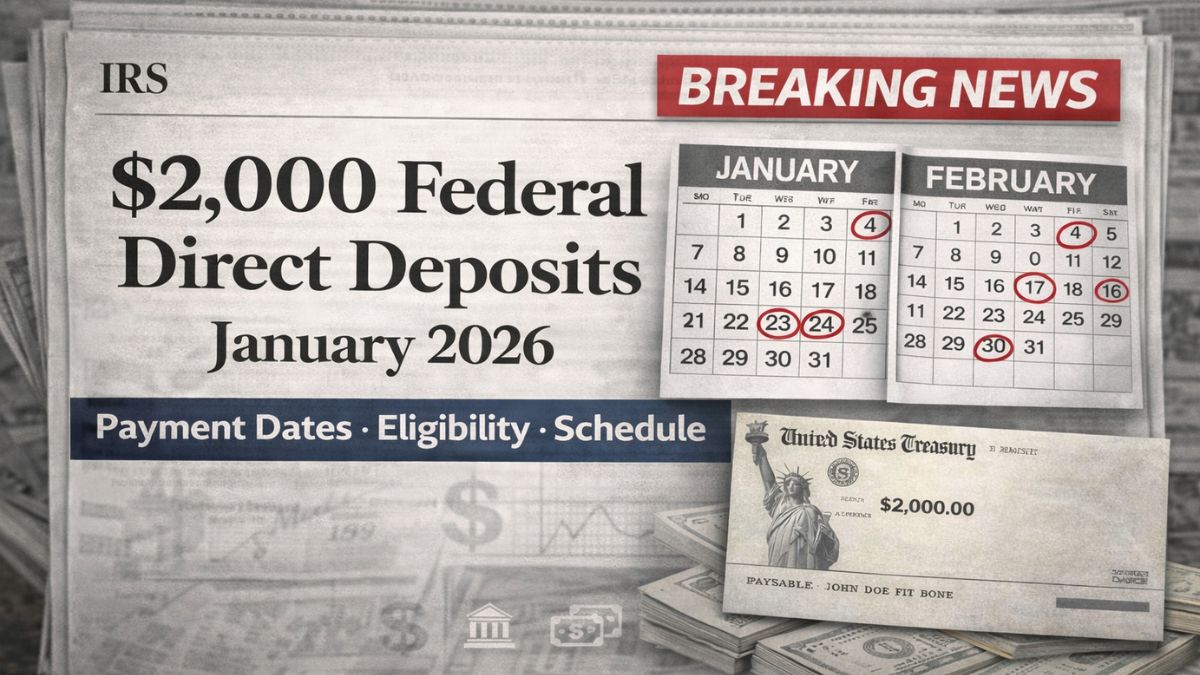
As January 2026 approaches, news about a possible $2,000 federal direct deposit has caught the attention of millions of Americans. With daily expenses continuing to rise, even a one-time payment can offer meaningful relief. Many people are asking whether the payment is real, who it is meant for, and how it would be delivered if issued.
What the January 2026 Payment Is Based On
According to the plan being discussed, the $2,000 payment is described as a one-time federal relief benefit linked to legislation passed in late 2025. The goal of the payment is short-term economic support for individuals and households facing ongoing cost pressures. It is not a loan, not a tax refund, and not money that must be repaid. The IRS would be responsible for issuing the payment using existing tax records.
How Payments Would Be Sent
The payment is designed to be automatic. If the IRS has valid banking details from a recent tax return, the money would be sent by direct deposit. Taxpayers without direct deposit information would receive a paper check at the mailing address on file. This method is intended to reduce delays and avoid the need for applications or registration.

Income and Filing Rules Explained
Eligibility for the payment is based mainly on income and filing status. Adjusted gross income from a 2024 federal tax return would be used to determine qualification. Under the described rules, single filers earning up to $150,000, heads of household up to $225,000, and married couples filing jointly up to $300,000 would qualify. Filing a 2024 tax return is required, along with having a valid Social Security number and not being claimed as a dependent.
When Payments Would Arrive
Payments would not be sent all at once. Instead, deposits would be issued in waves throughout January 2026. Direct deposits would usually appear within a few business days after release, while paper checks could take several weeks. Not receiving the payment early would not automatically mean someone is ineligible.
Why Staying Alert Matters
Whenever confirmed payments are discussed, scams often increase. The IRS does not ask for bank details through calls, texts, or emails. Any message asking for fees or verification should be treated with caution. Official updates only come from trusted government sources.

Final Thoughts
The proposed $2,000 federal direct deposit aims to provide short-term financial stability at the start of 2026. Understanding income limits, filing requirements, and payment timing helps replace uncertainty with clarity.
Disclaimer
This article is for informational and educational purposes only and does not provide tax, legal, or financial advice. Federal payment programs, eligibility rules, and timelines depend on official legislation and government action and may change. Readers should verify details through official IRS communications or consult a qualified professional before making financial decisions.