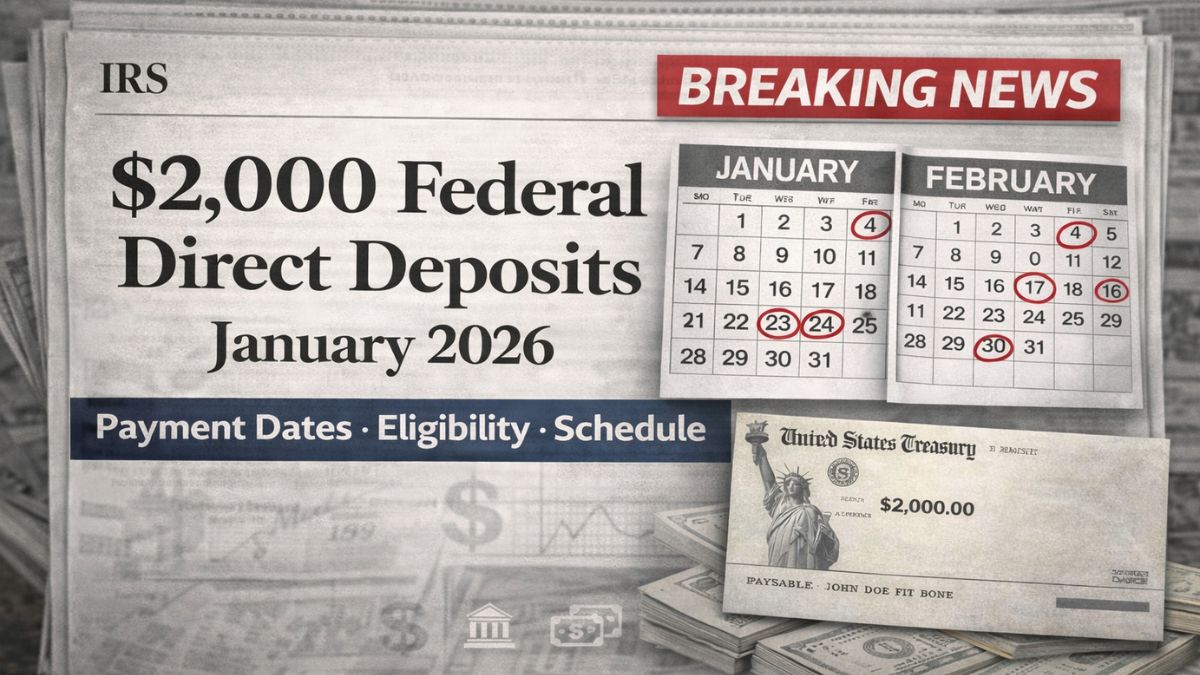
As 2026 begins, many Americans are closely following reports about a one-time $2,000 direct deposit expected to be issued by the Internal Revenue Service. The payment is being described as temporary financial relief aimed at helping households cope with rising costs. Expenses such as groceries, rent, utilities, fuel, and healthcare continue to strain budgets, especially for low- and middle-income families. This payment is intended to provide support early in the year, when financial pressure is often highest.
What the $2,000 Payment Is and Is Not
The $2,000 payment is not connected to a tax refund and does not need to be repaid. It is not a loan or an advance on future benefits. Instead, it is designed as direct financial assistance. The IRS plans to send the payment automatically using existing tax records, which means most eligible individuals will not need to apply or take extra steps to receive the money.
How Eligibility Is Expected to Work
Eligibility for the payment is expected to be based on information from recent federal tax returns, either for the 2024 or 2025 tax year. Income limits are expected to apply, meaning the payment is focused on households within certain earnings ranges. A valid Social Security number and U.S. residency for at least part of 2025 are also required. Families with dependents may qualify for additional amounts, depending on their filing status. Some households with income slightly above the cutoff may still receive a reduced payment.

When Payments May Be Sent
Based on current information, direct deposits are expected to begin around January 12, 2026. Payments will likely be issued in multiple waves throughout the month. Taxpayers who already have bank account information on file with the IRS are expected to receive their money first. Those without direct deposit details may receive paper checks by mail later in January, which could take additional time to arrive.
What SSI and VA Recipients Should Know
Many SSI and VA benefit recipients are wondering whether they qualify for the payment. While eligibility is mainly linked to tax records, individuals who do not normally file taxes may still qualify if their information is already available through federal benefit systems. The IRS is expected to release further guidance to clarify how non-filers will be handled.
How to Avoid Delays
To prevent delays, taxpayers should ensure their mailing address and bank account information are up to date with the IRS. Accurate records help ensure payments are delivered smoothly. For many households, this one-time payment could help cover essential expenses during the early months of 2026.

Disclaimer
This article is for informational and educational purposes only and does not provide financial, tax, or legal advice. Federal payment programs, eligibility rules, and payment schedules may change based on official government decisions. Readers should verify details through official IRS announcements or consult a qualified professional before making financial decisions.